
military divorce Lawyer in Brevard County
Military Divorce in Brevard County
Guidance from a military divorce lawyer in Brevard County for military divorce, retirement distribution, parenting plans, and federal military benefit rules.
As part of a military family, Christy Fisher understands the realities of military life on a deeply personal level. As a military divorce lawyer serving Brevard County, she brings both professional experience and personal insight to cases involving military divorce in Brevard County, including issues related to military divorce support, parenting plans, and military retirement distribution. Living within the military community has given her a clear understanding of the pressures service members and their spouses face, from deployments and frequent relocations to navigating military benefits and family responsibilities.
At Fisher Family Law & Mediation, Christy approaches military divorce matters with empathy and practical guidance. She helps military families address complex issues such as military pension division, military retirement distribution, and time-sharing arrangements affected by service obligations, while working toward solutions that support stability for children and long-term fairness for both spouses under Florida family law.
Military divorce cases involve legal issues that do not appear in most civilian divorces. Families connected to Patrick Space Force Base, Kennedy Space Center, and the surrounding defense community often face unique challenges during divorce. Questions about jurisdiction, federal military benefit laws, deployment schedules, and military retirement distribution often make these cases more complex. This is why having a military divorce lawyer who is part of a military family offers a perspective that others do not have.
Clients frequently seek guidance about military divorce in Brevard County, including Melbourne, Cocoa Beach, Satellite Beach, Titusville, Palm Bay, Merritt Island, and Cape Canaveral, where military families must navigate both Florida family law and federal military regulations.
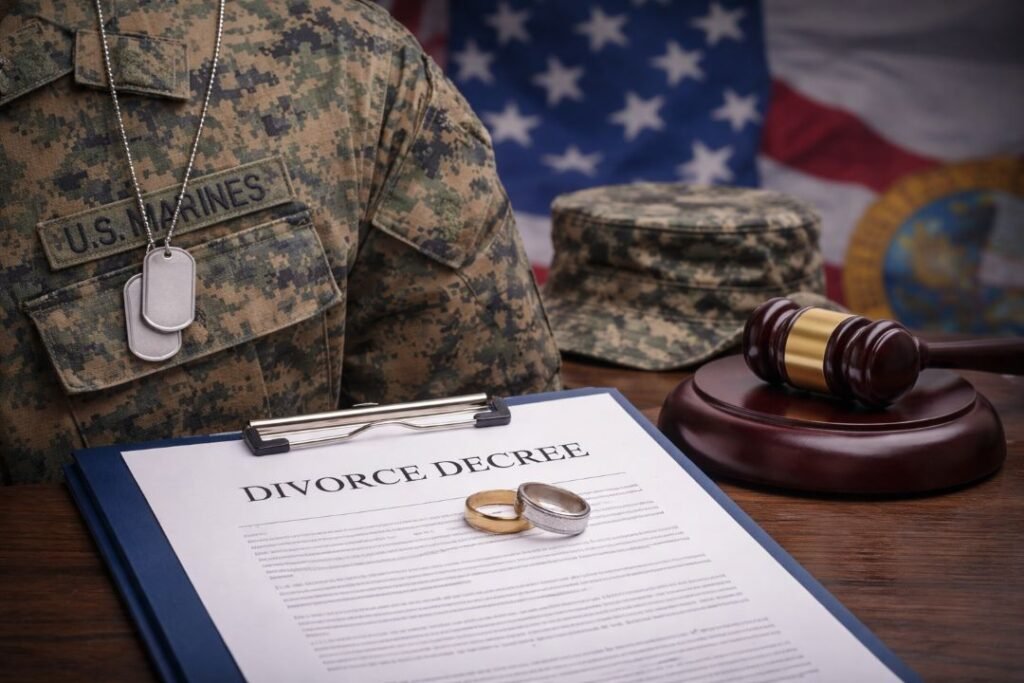
What Makes Military Divorce Different in Florida
A military divorce in Florida follows the same basic legal structure as a civilian divorce, but federal laws and military regulations add several additional layers of complexity.
Issues unique to military divorce may include:
- Determining the proper state for filing for divorce
- Servicemembers Civil Relief Act (SCRA) protections
- Deployment-related parenting plan considerations
- Military housing and Basic Allowance for Housing (BAH)
- Military retirement distribution and pension division
Working with a military divorce lawyer familiar with these issues helps ensure that both state and federal requirements are addressed properly.
Jurisdiction and Filing for Military Divorce in Brevard County
Military families often move frequently, which can make jurisdiction a complicated issue. Under Florida law, at least one spouse must generally reside in Florida for six months before filing for divorce.
However, active-duty service members stationed in Florida, including those assigned to Patrick Space Force Base, may qualify to file for divorce in Brevard County even if their legal home of record is another state.
Determining the correct jurisdiction is an important early step in any military divorce case, as it can affect property division, support obligations, and parenting arrangements.
Military Parenting Plans and Time-Sharing
Parenting arrangements in military divorce must often account for deployment schedules, relocations, and the possibility of reassignment to another installation.
Florida courts determine parenting plans based on the best interests of the child, but military families often require additional provisions addressing:
- Deployment or temporary duty assignments
- Virtual visitation during deployment
- Adjustments to time-sharing upon return from service
- Relocation due to PCS orders
Carefully drafted parenting plans help military families avoid returning to court each time military orders change.
Military Retirement Distribution in Divorce
One of the most complex issues in a military divorce is the division of military retirement benefits. Military pensions can represent one of the most valuable marital assets, and mistakes in drafting retirement orders can delay payments or result in financial losses.
Under the Uniformed Services Former Spouses’ Protection Act (USFSPA), Florida courts may treat military retirement pay as marital property subject to equitable distribution.
A military retirement distribution lawyer can help ensure that court orders dividing retirement pay meet the requirements of the Defense Finance and Accounting Service (DFAS) so that benefits are processed correctly.
Understanding the 10/10 Rule
The 10/10 rule is often misunderstood in military divorce cases.
This rule does not determine whether a former spouse is entitled to a share of military retirement. Instead, it determines how the payments are made.
If a marriage lasted at least 10 years and overlapped with at least 10 years of military service:
- The former spouse’s share of retirement may be paid directly by DFAS.
If the 10/10 rule is not met:
- The service member may still owe the former spouse a share of retirement, but payments are made directly between the parties rather than through DFAS.
Proper guidance from a military pension lawyer helps ensure these rules are properly addressed in the divorce order.
Military Divorce Support and Financial Issues
In addition to retirement division, military divorce support issues may involve several other financial considerations.
These may include:
- Spousal support and alimony
- Division of military housing allowances
- Survivor Benefit Plan (SBP) elections
- TRICARE eligibility for former spouses
- Interaction between retirement pay and VA disability compensation
Because federal military regulations affect these issues, careful legal guidance is important to avoid mistakes that may impact long-term benefits.
Mediation and Military Divorce
Many military divorce cases can be resolved through divorce mediation in Florida, which often provides a more efficient and flexible path forward for military families.
Divorce mediation allows couples to address issues such as:
- Parenting plans and time-sharing
- Military retirement distribution
- Spousal support and alimony financial agreements
For service members whose schedules may involve deployment or travel, family mediation can often be conducted virtually and scheduled more flexibly than court hearings.
When Court Involvement Is Necessary
Court involvement may be required when:
- Military retirement distribution is disputed
- Parenting arrangements cannot be agreed upon
- Financial issues remain unresolved
- One party contests the divorce
In these situations, representation from a military divorce lawyer serving Brevard County can help ensure that the legal process proceeds efficiently and in compliance with both Florida and federal law.
What to Expect
Clients navigating a military divorce in Brevard County can expect:
- Clear explanation of military divorce rules under Florida and federal law
- Guidance regarding military retirement distribution and pension division
- Assistance addressing parenting plans, support, and property division
- Representation during negotiation, mediation, or court proceedings
The goal is to help military families reach fair agreements that protect both parties while minimizing unnecessary conflict.
Service Areas
Fisher Family Law & Mediation assists active-duty service members, veterans, reservists, and military spouses navigating divorce, retirement division, parenting plans, and related family law matters. Military divorce representation is available in Melbourne, Cocoa Beach, Cape Canaveral, Palm Bay, Satellite Beach, Merritt Island, and throughout Brevard County, with mediation services available virtually when appropriate.

Work With Christy Fisher, Esq
20+ years experience, Mediation-first approach, Extensive child welfare background, Focused on fair, lasting outcomes
Frequently Asked Questions
1. How is a military divorce different from a civilian divorce?
A military divorce follows Florida family law, but it also involves federal regulations that apply specifically to service members. Issues such as military retirement distribution, federal benefit rules, and deployment-related parenting arrangements make these cases more complex than civilian divorces.
2. Can I file for military divorce in Brevard County if I am stationed here?
Yes, in many cases active-duty service members stationed in Florida, including those assigned to Patrick Space Force Base, may file for divorce in Brevard County even if their legal residence is in another state. Determining jurisdiction is an important first step.
3. How is military retirement divided in a divorce?
Military retirement may be treated as marital property under Florida law and divided between spouses. The division must comply with federal rules, including requirements set by the Defense Finance and Accounting Service (DFAS), to ensure payments are processed correctly.
4. What is the 10/10 rule in military divorce?
The 10/10 rule determines how military retirement payments are made—not whether a spouse is entitled to them. If the marriage lasted at least 10 years overlapping with 10 years of military service, DFAS may send payments directly to the former spouse. Otherwise, payments are handled between the parties.
Schedule a Confidential Consultation
If you are facing a military divorce in Florida or have questions about military retirement distribution, military divorce support, or parenting arrangements, experienced guidance can help you understand your options. Fisher Family Law & Mediation provides thoughtful legal support to military families throughout Brevard County. Schedule a Confidential Consultation to discuss your situation and learn how to move forward with clarity.