
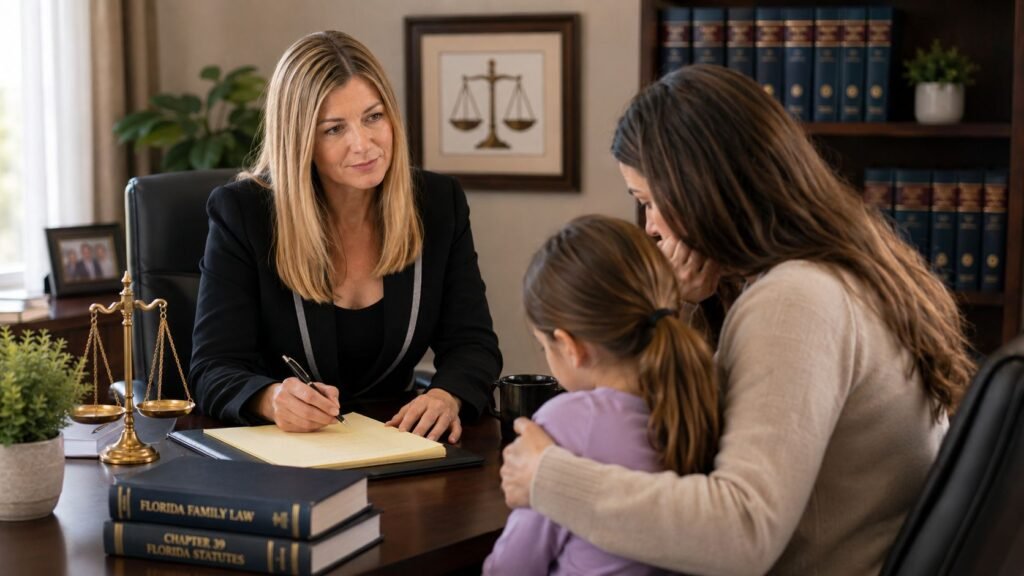
When allegations of abuse, abandonment, or neglect arise, Florida’s dependency court system is designed to protect children’s safety while working toward family reunification whenever possible. Dependency law can be overwhelming for parents, relatives, and caregivers who suddenly find themselves involved in court proceedings. Understanding the process—and having experienced legal guidance—can make a significant difference in protecting your rights and your family’s future.
If you are facing a dependency law matter in Melbourne, Palm Bay, Titusville, West Melbourne, Merritt Island, or anywhere in Brevard County, working with an attorney who understands Florida’s child welfare system can help you navigate this complex legal process with confidence. At Fisher Family Law & Mediation, Christy Fisher, Esq. brings more than two decades of experience handling Florida dependency cases at every level of the child welfare system, offering practical guidance during some of life’s most challenging moments.
Learn more about our dependency law services:
https://fisherfamilylawandmediation.com/dependency-law
What Is Dependency Law in Florida?
Dependency law is the area of Florida law that addresses situations where a child is alleged to have been abused, abandoned, or neglected. Unlike criminal proceedings, dependency cases focus on the child’s safety and well-being rather than punishing a parent.
These cases are governed primarily by Chapter 39 of the Florida Statutes and are handled in Florida’s dependency courts.
A dependency case may begin after the Florida Department of Children and Families (DCF) investigates allegations involving:
- Physical abuse
- Emotional abuse
- Sexual abuse
- Neglect
- Abandonment
- Substance abuse affecting parenting
- Unsafe living conditions
- Domestic violence that places children at risk
The court’s primary objective is always to determine what is in the child’s best interests while making reasonable efforts to preserve and reunify families whenever it is safe to do so.
Who Can Become Involved in a Dependency Case?
Many people may become involved during dependency law proceedings, including:
- Parents
- Legal guardians
- Relatives
- Foster parents
- DCF investigators
- Case managers
- Guardians ad Litem
- Attorneys
- Medical professionals
- Teachers and counselors
Each plays a different role in ensuring the court has the information needed to make decisions regarding the child’s safety and future.
How Does a Florida Dependency Case Begin?
Most dependency law cases start when DCF receives a report through Florida’s Abuse Hotline.
After receiving a report, investigators assess whether there is sufficient evidence to believe a child is in danger. Depending on the circumstances, DCF may:
- Close the investigation
- Offer voluntary services
- Develop a safety plan
- Remove the child from the home
- File a dependency petition
If a child is removed, the court must quickly review whether removal was legally justified and determine the next steps.
What Happens During Dependency Court?
Dependency proceedings typically involve several stages.
Shelter Hearing
If a child is removed from the home, the court holds a shelter hearing shortly afterward to determine whether the child should remain in protective custody.
Arraignment
Parents are informed of the allegations and may admit or deny the dependency petition.
Adjudicatory Hearing
If the allegations are disputed, the judge hears evidence and determines whether the child is legally dependent under Florida law.
Case Plan
If dependency is established, the court orders a case plan designed to address the issues that led to court involvement.
Case plans may require:
- Parenting classes
- Counseling
- Substance abuse treatment
- Mental health evaluations
- Stable housing
- Employment
- Supervised visitation
Judicial Reviews
The court regularly reviews the family’s progress and whether the child can safely return home.
Permanency Hearing
The court ultimately determines the child’s permanent living arrangement, which may include:
- Reunification
- Permanent guardianship
- Placement with relatives
- Adoption
- Another legally approved permanency option
Can Parents Regain Custody?
Yes. Florida dependency law strongly favors family reunification whenever it can be achieved safely.
Parents who successfully complete their court-ordered case plans often regain custody of their children.
The timeline varies depending on factors such as:
- Compliance with services
- Child safety concerns
- Substance abuse recovery
- Housing stability
- Overall progress
Every case is unique, making experienced legal representation especially important.
Why Experience Matters in Dependency Cases
Dependency law proceedings move quickly and involve strict legal deadlines. Decisions made early in the case can significantly affect a family’s future.
Christy Fisher, Esq. has handled dependency matters from multiple perspectives throughout her career. Before founding Fisher Family Law & Mediation, she served as:
- Assistant State Attorney
- Appellate and Dependency Counsel with the Florida Attorney General’s Office
- Managing Attorney for Children’s Legal Services, supervising attorneys handling abuse, abandonment, and neglect cases
- Chief Legal Officer for Embrace Families, helping oversee Florida’s child welfare system across multiple counties
This extensive experience provides valuable insight into how dependency cases are investigated, litigated, and resolved. Today, Christy Fisher focuses on helping families navigate these sensitive legal matters with compassion, professionalism, and practical guidance.
How Dependency Cases Affect Other Family Law Matters
Dependency proceedings can intersect with many areas of family law, including:
- Divorce Services
- Parental Time-Sharing
- Paternity Establishment
- Modification of Orders
- Adoption Services
A dependency case may impact parenting plans, time-sharing arrangements, or future family court proceedings. Having an attorney who understands both dependency law and broader Florida family law helps ensure these issues are addressed comprehensively.
Can Mediation Help in Dependency Cases?
While dependency proceedings remain under court supervision, mediation can sometimes assist families in resolving certain disputes, improving communication, and developing workable agreements when appropriate.
At Fisher Family Law & Mediation, mediation-first principles emphasize respectful communication, practical solutions, and reducing unnecessary conflict whenever possible. Although not every dependency issue can be resolved through mediation and may require litigation, collaborative problem-solving often benefits families working toward reunification and long-term stability.
Why Local Representation Matters in Brevard County
Dependency proceedings involve local judges, court procedures, DCF personnel, and community resources. Working with a dependency attorney familiar with Melbourne and Brevard County can provide valuable insight into navigating the local court system effectively.
Whether you live in Melbourne, Palm Bay, Titusville, West Melbourne, Rockledge, Cocoa, Satellite Beach, Cape Canaveral, or elsewhere in Brevard County, experienced legal guidance can help you understand your rights and responsibilities throughout the dependency process.
Speak with an Experienced Florida Family Law Attorney
Dependency cases are among the most emotionally challenging legal matters a family can face, but you do not have to navigate the process alone. At Fisher Family Law & Mediation, Christy Fisher helps families throughout Brevard County understand their legal options while pursuing solutions that prioritize children’s safety, family stability, and long-term success.
If you are facing a dependency matter or have questions about your rights, contact Fisher Family Law & Mediation today.
Fisher Family Law & Mediation
3020 West New Haven Avenue
Melbourne, FL 32904
📞 321-252-2734
🌐 https://fisherfamilylawandmediation.com
Frequently Asked Questions
What is dependency court in Florida?
Dependency court hears cases involving allegations of child abuse, abandonment, or neglect and determines what arrangements best protect a child’s safety and well-being.
Can a child be removed without a court order?
In emergency situations, DCF may remove a child before obtaining a court order, but the court must promptly review whether the removal was appropriate.
How long do dependency cases last?
The timeline varies depending on the facts of each case, parental progress, and the child’s needs. Some cases resolve within several months, while others continue longer if additional services are necessary.
Do parents have the right to an attorney?
Yes. Parents involved in dependency proceedings have important legal rights, including representation during court proceedings.
Can relatives seek placement of a child?
In many cases, Florida courts consider placement with qualified relatives before other permanency options when it is in the child’s best interests.